




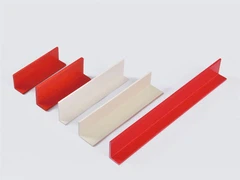


SMC Material Molding Process
Sep 10, 2024
Leave a message
The SMC material molding process is one of the most efficient FRP/composite molding processes.
The SMC molding process also has many advantages, such as: accurate product size, smooth surface, good repeatability of product appearance and size, complex structure can also be molded at one time, and secondary processing does not need to damage the product. However, defects can also occur in the SMC molding production process
It is mainly manifested in the following aspects:
1) Lack of material: Lack of material refers to the fact that the SMC molded parts are not completely filled, and their production parts are mostly concentrated at the edge of the SMC product, especially the root and top of the corners.
Causes:
(a) The amount of discharge is small
(b) SMC material has poor fluidity
(c) The pressure of the equipment is insufficient
(d) Curing too quickly.
Mechanism and countermeasures:
(1) After the SMC material is thermoplasticized, the melt viscosity is large, and there is not enough time, pressure, and volume to fill the mold cavity before the cross-linking curing reaction is completed.
(2) The storage time of SMC molded material is too long, and the foam volatilization of styrene is excessive, resulting in a significant reduction in the fluidity of SMC molded material.
(3) The resin paste is not soaked with fibers. During molding, the resin paste cannot drive the fiber to flow, resulting in a shortage of material. The most direct solution to the shortage of materials caused by the above reasons is to remove these molded materials when cutting materials.
(4) Insufficient feeding amount causes material shortage. The solution is to increase the amount of material appropriately.
(5) The molded material is wrapped with too much air and a large amount of volatiles. The solution is to increase the number of exhausts appropriately; Appropriately increase the feeding area and burp for a certain period of time to clean the mold; Increase the molding pressure appropriately.
(6) The pressurization is too late, and the molded material has been cross-linked and cured before filling the mold cavity.
(7) If the mold temperature is too high, the cross-linking curing reaction is advanced, and the temperature should be appropriately cooled.
2) Stomata. There are regular or irregular small holes on the surface of the product, which are mostly generated at the top and middle thin walls of the product. Mechanism and countermeasures:
(1) The SMC molded material is wrapped in a large amount of air and has a large volatile content, and the exhaust is not smooth; The thickening effect of SMC material is not good, and the gas cannot be effectively driven out. For the above-mentioned causes, it can be effectively controlled by increasing the number of exhaust times and cleaning the mold.
(2) If the feeding area is too large, it can be controlled by appropriately reducing the feeding area. In practice, human factors may also cause trachoma. For example, if the pressure is too early, it may make the gas wrapped in the molded material difficult to discharge, resulting in surface defects of porosity on the surface of the product.
3) Warping deformation. The main causes are uneven curing of the molded material and shrinkage of the product after demolding. Mechanism and countermeasures: During the resin curing reaction, the chemical structure changes, causing volume shrinkage, and the uniform curing makes the product warp to the side that cures first. Secondly, the thermal expansion coefficient of the product is larger than that of the steel mold. When the product is cooled, its unidirectional shrinkage is greater than the unidirectional thermal shrinkage of the mold. To this end, the following methods are used to solve the problem:
(1) Reduce the temperature difference between the upper and lower molds, so that the temperature distribution is as uniform as possible;
(2) Use cooling fixtures to limit deformation;
(3) Appropriately increase the molding pressure, increase the structural compactness of the product, and reduce the shrinkage rate of the product;
(4) Appropriately extend the holding time and eliminate internal stress.
(5) Adjust the curing shrinkage of SMC material.
4) Blistering. A semicircular bulge on the surface of the cured product.
Mechanism and countermeasures:
It may be that the curing of the material is incomplete, the local temperature is too high or the volatile content in the material is large, and the air is trapped between the sheets, which makes the semicircle on the surface of the product bulge.
(1) Appropriately increase the molding pressure
(2) Extend the holding time
(3) Reduce the mold temperature.
(4) Reduce the discharging area
5) The uneven surface color of the product generation mechanism and countermeasures
(1) The mold temperature is uneven and the local temperature is too high, so the mold temperature should be properly controlled;
(2) The fluidity of the molded material is poor, resulting in uneven fiber distribution, which can generally increase the molding pressure and increase the fluidity of the melt;
(3) In the process of color paste blending, the pigment and resin cannot be well miscited.
Send Inquiry