





What is the density of smc molded products?
Oct 22, 2025
Leave a message
Hey there! I'm a supplier of SMC molded products, and today I wanna chat about something that's super important in our industry: the density of SMC molded products.
First off, let's break down what SMC is. SMC stands for Sheet Molding Compound. It's a composite material made up of chopped glass fibers, resin, fillers, and various additives. This stuff is awesome because it can be molded into all sorts of shapes and sizes, and it has some really great properties like high strength, good corrosion resistance, and excellent electrical insulation.
Now, onto density. Density is basically how much mass is packed into a certain volume. For SMC molded products, density plays a huge role in determining their performance and cost. A higher density usually means more material is used, which can lead to stronger and more durable products. But it also means the products will be heavier and potentially more expensive to produce and transport.


The density of SMC molded products can vary quite a bit depending on a few factors. One of the main factors is the type and amount of fillers used. Fillers are added to the SMC to reduce costs, improve certain properties, or change the appearance of the final product. Common fillers include calcium carbonate, talc, and mica. Different fillers have different densities, so the more filler you add, the more it can affect the overall density of the SMC.
Another factor is the glass fiber content. Glass fibers are a key component of SMC because they provide strength and stiffness. Generally, the higher the glass fiber content, the higher the density of the SMC. This is because glass fibers are denser than the resin and other components in the SMC.
The molding process also has an impact on density. During the molding process, the SMC is compressed under high pressure and heat. If the pressure is too low or the heating is uneven, the SMC may not be fully compacted, resulting in a lower density. On the other hand, if the pressure is too high, it can cause the glass fibers to break, which can also affect the density and the properties of the final product.
So, what's the typical density range for SMC molded products? Well, it can vary from about 1.5 g/cm³ to 2.5 g/cm³. Products with a lower density are often used in applications where weight is a concern, like in the automotive or aerospace industries. For example, SMC parts used in cars can help reduce the overall weight of the vehicle, which can improve fuel efficiency.
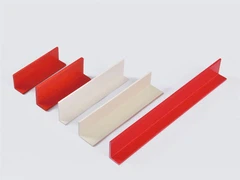
On the other hand, products with a higher density are used in applications where strength and durability are more important. For instance, SMC Insulation Rod used in electrical systems need to be able to withstand high voltages and mechanical stress, so they usually have a higher density.
Let's take a closer look at some specific SMC molded products and their density requirements.
SMC Responder is often used in emergency response equipment. These products need to be lightweight enough to be easily carried around, but also strong enough to withstand rough handling. So, they typically have a density in the lower to middle range of the SMC density spectrum.
SMC Cable Bracket are used to support and organize cables in various industries, including telecommunications and power distribution. These brackets need to be strong and rigid to hold the weight of the cables, so they usually have a higher density.
As a supplier of SMC molded products, I understand the importance of getting the density just right. That's why we have a team of experts who carefully control every step of the production process, from selecting the right raw materials to optimizing the molding parameters. We use state - of - the - art equipment and quality control measures to ensure that our products meet the highest standards in terms of density and other properties.
If you're in the market for SMC molded products, whether it's for a small - scale project or a large - scale industrial application, I'd love to talk to you. We can work together to determine the best density and other specifications for your specific needs. Whether you need a lightweight and cost - effective solution or a high - strength and durable product, we've got you covered.
So, don't hesitate to reach out and start a conversation. We're here to provide you with the best SMC molded products and excellent customer service. Let's work together to find the perfect solution for your project!
References
- "Handbook of Sheet Molding Compounds" by T. K. Ghosh
- "Composite Materials: Design and Applications" by Anthony M. Waas
Send Inquiry