





What are the quality assurance systems in SMC Caopenjing?
Jul 29, 2025
Leave a message
As a supplier for SMC Caopenjing, I've had the privilege of being closely involved in the company's operations and have witnessed firsthand the comprehensive quality assurance systems in place. These systems are the backbone of SMC Caopenjing, ensuring that the products, such as the SMC Load-bearing Manhole Cover, SMC Slope Protection Brick, and SMC Inspection Well Elevation Joint, meet the highest standards of quality and performance.
Raw Material Inspection
The quality assurance process at SMC Caopenjing begins with the inspection of raw materials. Every batch of raw materials, including resins, fibers, and additives, is thoroughly examined before being used in production. This initial step is crucial as the quality of the raw materials directly impacts the final product.
The inspection team at SMC Caopenjing uses a variety of advanced testing methods to assess the raw materials. For example, they conduct chemical analysis to ensure that the resins have the correct chemical composition and properties. They also test the mechanical properties of the fibers, such as their tensile strength and modulus, to guarantee that they can provide the necessary reinforcement for the SMC products.
In addition to these laboratory tests, the inspection team also checks the physical appearance of the raw materials. They look for any signs of damage, contamination, or irregularities that could affect the quality of the final product. Only when the raw materials pass all these inspections are they approved for use in production.
In - process Quality Control
Once the raw materials are approved, the production process begins. During this stage, SMC Caopenjing has a strict in - process quality control system in place. This system monitors every step of the production process to ensure that the products are being manufactured according to the specified standards.

One of the key aspects of in - process quality control is the use of automated monitoring equipment. For instance, sensors are installed on the production lines to measure various parameters such as temperature, pressure, and flow rate. These sensors continuously collect data and transmit it to a central control system. If any of the parameters deviate from the set values, the system will automatically alert the operators, who can then take immediate corrective actions.
The operators also conduct regular visual inspections of the products during the production process. They check for any visible defects, such as surface cracks, bubbles, or uneven thickness. If a defect is found, the product is immediately removed from the production line and sent for rework or disposal, depending on the severity of the defect.
Another important part of in - process quality control is the implementation of statistical process control (SPC) techniques. SPC involves collecting and analyzing data from the production process to identify any trends or patterns that could indicate potential quality problems. By using SPC, SMC Caopenjing can detect and address quality issues before they become major problems, thus improving the overall efficiency and quality of the production process.
Final Product Testing
After the products are manufactured, they undergo a series of final product tests. These tests are designed to simulate real - world conditions and ensure that the products can perform as expected in actual applications.
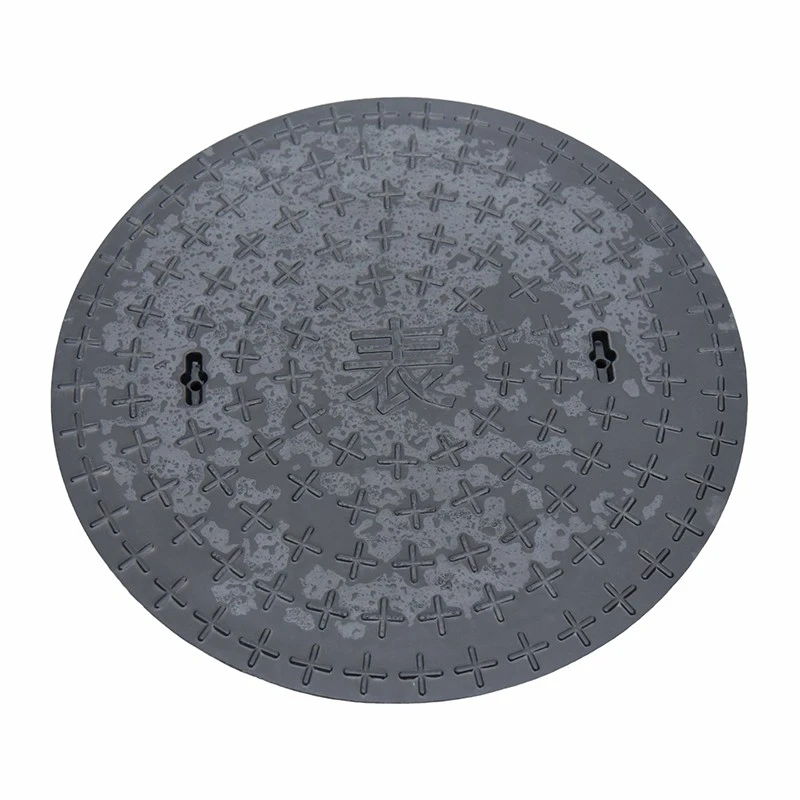
For the SMC Load-bearing Manhole Cover, for example, it is subjected to load - bearing tests. The manhole cover is placed on a test platform, and a gradually increasing load is applied to it until it reaches the specified design load. The test measures the deformation and strength of the manhole cover to ensure that it can safely support the expected traffic loads.
The SMC Slope Protection Brick is tested for its erosion resistance and stability. The bricks are exposed to simulated rainfall and water flow to evaluate their ability to prevent soil erosion on slopes. They are also tested for their interlocking properties to ensure that they can form a stable structure when installed on a slope.
The SMC Inspection Well Elevation Joint is tested for its sealing performance and durability. It is installed in a test setup that simulates the actual installation conditions of the inspection well. Water is then introduced into the test setup, and the joint is monitored for any signs of leakage. The joint is also subjected to cyclic loading and environmental aging tests to assess its long - term durability.
Quality Assurance Documentation
In addition to the above - mentioned testing and control measures, SMC Caopenjing also maintains detailed quality assurance documentation. This documentation includes records of raw material inspections, in - process quality control data, and final product test results.
The quality assurance documentation serves several important purposes. Firstly, it provides a traceable record of the quality of each product. If a quality issue arises after the product is delivered to the customer, the documentation can be used to trace back the source of the problem, whether it is due to raw materials, production process, or final testing.
Secondly, the documentation is used for continuous improvement. By analyzing the data in the documentation, SMC Caopenjing can identify areas where the quality assurance system can be further optimized. For example, if they notice a recurring quality problem in a particular production process, they can use the data to develop and implement corrective and preventive actions.
Supplier Evaluation and Management
As a supplier to SMC Caopenjing, I am also part of their quality assurance system. SMC Caopenjing has a comprehensive supplier evaluation and management program. They regularly evaluate the performance of their suppliers, including me, based on several criteria such as product quality, delivery time, and customer service.
During the evaluation process, SMC Caopenjing reviews the quality of the products I supply, as well as my production processes and quality control measures. They also assess my ability to meet their delivery requirements and provide good customer service. Based on the evaluation results, they may adjust the terms of our cooperation, such as the order quantity or the price.
To ensure that I can meet their quality standards, SMC Caopenjing also provides me with technical support and training. They share their knowledge and experience in quality assurance with me, helping me to improve my own quality control system. This collaborative approach between SMC Caopenjing and its suppliers helps to ensure the overall quality of the SMC products.
Conclusion
The quality assurance systems at SMC Caopenjing are comprehensive and well - established. From raw material inspection to final product testing, every step of the production process is carefully monitored and controlled. The use of advanced testing methods, automated monitoring equipment, and statistical process control techniques ensures that the products, such as the SMC Load-bearing Manhole Cover, SMC Slope Protection Brick, and SMC Inspection Well Elevation Joint, meet the highest standards of quality and performance.
If you are in need of high - quality SMC products, I highly recommend SMC Caopenjing. Their strict quality assurance systems guarantee that you will receive products that are reliable, durable, and fit for your specific applications. Whether you are involved in construction, infrastructure, or other industries, SMC Caopenjing's products can provide you with the solutions you need. If you are interested in purchasing SMC products from SMC Caopenjing, I encourage you to reach out and start a procurement negotiation. You can be confident in the quality of the products and the excellent service that SMC Caopenjing offers.
References
- Quality Control Handbook, edited by Juran and Gryna.
- Statistical Process Control: Principles and Practice, by Douglas C. Montgomery.
Send Inquiry