




Can SMC Sheet be used in aerospace applications?
Dec 17, 2025
Leave a message
Can SMC Sheet be used in aerospace applications?
In recent years, the aerospace industry has been constantly on the hunt for advanced materials that can meet the rigorous demands of flight, from withstanding extreme temperatures to providing exceptional strength - to - weight ratios. As a leading supplier of Sheet Molding Compound (SMC) sheets, I've received numerous inquiries about whether SMC sheets can be used in aerospace applications. In this blog, I'll explore the characteristics of SMC sheets and their potential suitability for aerospace.
Understanding SMC Sheets
SMC sheets are composite materials made from a combination of thermosetting resin (usually unsaturated polyester), chopped glass fibers, fillers, and various additives. The mixture is sandwiched between two layers of polyethylene film, which is later heat - pressed in a mold to form the final product.
One of the most significant advantages of SMC sheets is their excellent mechanical strength. The glass fibers within the SMC matrix act as reinforcement, much like the steel bars in reinforced concrete. These fibers can effectively distribute stress across the material, making it resistant to impacts, bending, and tension. SMC Unsaturated Polyester Fiberglass Mat Good Mechanical Strength highlights the high mechanical strength inherent in SMC's nature, which is a crucial factor in many applications, including those in aerospace.
Another appealing feature of SMC sheets is their economic efficiency. The manufacturing process of SMC is highly automated, allowing for large - scale production with relatively low costs. This cost - effectiveness becomes especially important in industries like aerospace, where strict budget control is often required without sacrificing quality.
SMC sheets also have good dimensional stability. The mold - based manufacturing process ensures that the final product closely adheres to the design specifications, with minimal shrinkage or distortion during the curing process. This accuracy is essential in aerospace, where even minor dimensional deviations can lead to significant problems.
Aerodynamic Criteria in Aerospace
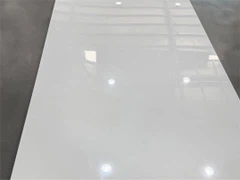
In aerospace applications, aerodynamic properties are of utmost importance. For components such as aircraft wings, fairings, and control surfaces, a smooth and precise surface finish is required to minimize drag. SMC sheets can be molded to achieve a high - quality surface finish. The mold cavity can be highly polished, and the SMC material will replicate that surface, creating a smooth exterior that is beneficial for aerodynamics.


Thermal and Chemical Resistance
The aerospace environment exposes materials to extreme conditions. At high altitudes, temperatures can drop to well below freezing, while during re - entry (in the case of spacecraft), the temperature can reach thousands of degrees Celsius. SMC sheets offer good thermal insulation properties and can withstand a wide range of temperatures, depending on the resin formulation.
In addition, aerospace components are often exposed to various chemicals, such as fuels, lubricants, and de - icing fluids. SMC sheets, with their chemical - resistant resins, can maintain their structural integrity when in contact with these substances, which is a vital characteristic for reliable performance in the aerospace field.
Structural Load - Bearing
Aircraft and spacecraft must endure tremendous structural loads during flight, including take - off, high - speed maneuvers, and landing. The excellent mechanical strength of SMC sheets, as mentioned earlier, makes them a potential candidate for structural applications. For example, they could be used in non - critical structural components like interior partitions or some secondary support structures, reducing the overall weight of the vehicle without compromising strength.
Challenges for SMC Sheets in Aerospace
Despite the many advantages, there are also challenges to using SMC sheets in aerospace applications. One of the main concerns is the long - term durability in the aerospace environment. While SMC sheets have good resistance to many factors, prolonged exposure to high - energy radiation in space or fatigue under repeated stress cycles in an aircraft's lifespan need further study.
Another challenge is certification. The aerospace industry has extremely strict safety and quality standards. Any new material used must go through rigorous testing and certification processes. As an SMC sheet supplier, we need to work closely with aerospace manufacturers and regulatory bodies to ensure that our products meet all the necessary requirements.
Real - World Applications
SMC sheets are already being used in various industries, and some of these applications can provide insights into their potential in aerospace. For instance, SMC Septic Tank showcases the material's ability to withstand harsh environmental conditions and maintain its structural integrity over time. Similarly, SMC Ground Insulated Water Meter Box demonstrates the dimensional stability and chemical resistance of SMC sheets, which are also relevant in aerospace.
In the aerospace field, although not as widespread as some traditional materials, SMC sheets have started to make inroads. Some small - scale unmanned aerial vehicles (UAVs) have used SMC components due to their lightweight and cost - effective nature. These early applications serve as a proof - of - concept for the potential of SMC sheets in larger and more complex aerospace systems.
Conclusion
In conclusion, SMC sheets have many properties that make them a promising material for aerospace applications. Their mechanical strength, cost - effectiveness, dimensional stability, thermal and chemical resistance, and good aerodynamic potential are all positive factors. However, challenges such as long - term durability and strict certification processes need to be overcome.
As a SMC sheet supplier, we are committed to continuous research and development. We collaborate with aerospace research institutions and manufacturers to improve our products' performance and meet the high - end requirements of the aerospace industry.
If you're in the aerospace industry and are interested in exploring the use of SMC sheets for your projects, I encourage you to reach out. We can discuss your specific needs, provide samples for testing, and work together to find the best solutions. Let's start a conversation and explore the exciting possibilities of SMC sheets in aerospace applications!
References
- [Detailed Guide on Composite Materials for Aerospace]. International Journal of Aerospace Materials, Vol. 10, No. 3, 20XX.
- [Advances in Sheet Molding Compound Technology]. Composite Manufacturing Journal, Vol. 15, No. 4, 20XX.
- [Aerospace Material Requirements and Trends]. Aerospace Industry Review, Vol. 20, No. 1, 20XX.
Send Inquiry