






How much do you know about SMC sheets?
Oct 10, 2024
Leave a message
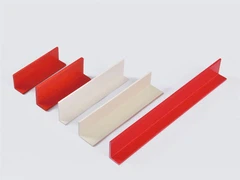
First of all, SMC is a composite material, which belongs to a type of FRP. The main raw materials are composed of GF (special yarn), MD (filler) and various additives. SMC material has many advantages, it has very good performance characteristics, in practical use, this material is often made into common components, there is absolute sealing waterproof performance, anti-corrosion performance, anti-theft performance, electrical insulation, the appearance is also very beautiful, coupled with the safety protection of locks and seals, the service life is also long, then we specifically understand SMC sheet in more detail through the following points.
1. SMC production raw materials.
Its raw materials mainly include three types of synthetic resins, reinforcing materials and auxiliary materials.
Synthetic resins are unsaturated polyester resins, and different unsaturated resins directly affect the thickening effect, processing characteristics, product properties, shrinkage and surface state of the resin paste. Unsaturated polyester resins have the following requirements for SMC:
1. Low viscosity, good wettability to glass fiber;
2. The same thickener has strong activity and can meet the thickening requirements;
3. Fast curing speed, short production cycle and high production efficiency;
4. The solid compound has sufficient thermal strength to promote thermal demoulding;
Solid compounds are tough enough not to crack when the product undergoes a certain deformation.
Reduced shrinkage.
Reinforcement: The reinforcement material is shredded fiberglass roving or raw silk. Of the unsaturated polyester molding compounds used in SMC, only shredded fiberglass felt is currently made from shredded fiberglass felt, while premix is reinforced with shredded fiberglass, asbestos, hemp, and other organic fibers. The glass fiber content can be adjusted between 5% and 50% of SMC.
Auxiliary materials include curing agents (initiators), surface treatment agents, thickeners, low shrinkage agents, release agents, colorants, fillers and crosslinkers.
2. SMC preparation technology.
The production process of SMC mainly includes the preparation of resin paste, sizing operation, fiber cutting, sedimentation and impregnation, resin thickening and other processes. The process is as follows:
The preparation of resin paste in sizing and the preparation of resin paste in sizing can be done in two ways: batch method and continuous method. The batch processing procedure is as follows:
1. Stir the unsaturated polyester resin and styrene evenly in the stirring kettle;
2. Add initiator in the stirring kettle and mix with resin and styrene;
3. Add mixed thickener and release agent;
4. Add fillers and low-shrinkage additives when stirring at low speed;
5. Dispersion of each ingredient listed in the recipe, stop stirring, and let stand. The resin paste in the SMC formulation is divided into two parts, one is the thickener, one is the release agent, one part the filler and the styrene, and the other part is measured and mixed separately and sent to the corresponding storage unit on the SMC machine. If necessary, it is metered by a pipe metering pump and sent to a static mixer, where it is mixed and then sent to the adhesive area of the SMC unit, where it is then coated with polyethylene film.
Impregnation and compaction: The chassis film coated with resin paste is pulled by the device and enters the shredded glass fiber sedimentation chamber, and the cut shredded glass fiber is evenly precipitated on the resin paste, and after the required amount of precipitation is reached, the transmission device leaves the sedimentation chamber, overlaps with the upper support film deposited with resin paste, and then enters the dense SMC plate, which is composed of a series of multiple single-chip microcomputers arranged in a staggered manner. Under the action of tension and rollers, the lower support film and the chopped glass fibers are tightly pressed together, and through several iterations, the shredded glass fibers are impregnated with resin to repel the air bubbles in them, resulting in a dense and uniform SMC sheet.
Send Inquiry