




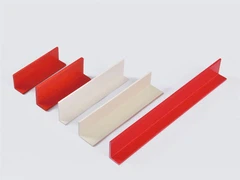

How does BMC Group Material compare to fiberglass in terms of strength?
Dec 15, 2025
Leave a message
Hey there! As a supplier of BMC Group Material, I've been getting a lot of questions lately about how it stacks up against fiberglass in terms of strength. So, I thought I'd dive into this topic and share some insights with you all.


First off, let's talk a bit about what these materials are. Fiberglass is a well - known composite material. It's made up of extremely fine glass fibers, and it's been around for ages. You can find it in all sorts of products, from boats and car bodies to insulation. BMC, or Bulk Molding Compound, on the other hand, is a thermosetting polyester material that's mixed with various fillers, reinforcements, and additives.
When it comes to strength, both materials have their own unique characteristics. Let's start with fiberglass. One of the big selling points of fiberglass is its high strength - to - weight ratio. It's relatively light, but it can still handle a good amount of stress. This makes it ideal for applications where weight is a concern, like in the aerospace industry. Fiberglass can resist bending and stretching forces quite well, and it has a decent amount of impact resistance.
However, BMC Group Material has some serious advantages in the strength department. For starters, BMC has excellent dimensional stability. That means it doesn't warp or deform easily under different environmental conditions. Whether it's high temperatures, humidity, or chemicals, BMC can hold its shape and maintain its strength.
The fibers in BMC are evenly distributed throughout the compound. This uniform distribution gives BMC a more consistent strength profile. Unlike fiberglass, where the fibers might not be perfectly aligned or dispersed, the random orientation of the fibers in BMC ensures that the strength is consistent in all directions. This is a huge plus, especially when the material is used in complex shapes or where forces are applied from multiple directions.
Let's take a look at some real - world applications to see how the strength differences play out. Consider electrical enclosures. The BMC Electrical Casing made from BMC Group Material has to protect the electrical components inside. It needs to be strong enough to withstand physical impacts, like accidental knocks or bumps. BMC's high impact resistance and dimensional stability make it a great choice. Fiberglass can also work for electrical casings, but it might be more prone to cracking or delamination over time, especially in harsh environments.
Another example is the BMC Motor Wiring Terminal. These terminals need to have good mechanical strength because they're often in areas where there's a lot of vibration and movement. BMC's ability to resist fatigue and maintain its strength under continuous stress makes it well - suited for this application. Fiberglass might start to show signs of wear and tear more quickly in these situations.
In terms of compressive strength, BMC also has an edge. Compressive strength is how well a material can handle forces that squeeze it together. In applications where the material is subject to heavy loads or pressure, like in some industrial machinery parts, BMC can handle the stress better than fiberglass. The fillers and reinforcements in BMC help it distribute the compressive forces evenly, reducing the risk of failure.
Now, I know what you might be thinking. Are there any downsides to BMC Group Material when it comes to strength? Well, like any material, it's not perfect. Fiberglass can sometimes have a higher tensile strength in certain directions if the fibers are carefully aligned. Tensile strength is the ability of a material to resist being pulled apart. But in most real - world applications, where the forces are more complex and come from multiple directions, BMC's overall strength characteristics make it a better choice.
The manufacturing process of BMC also contributes to its strength. BMC is typically molded under high pressure and temperature, which helps the material form a dense and strong structure. Fiberglass can be made through different processes, and some of these might not result in as consistent a strength as BMC's molding process.
When you're considering using either of these materials for your project, it's important to think about the specific requirements. If you need a material that's lightweight and has high tensile strength in a specific direction and the environment is relatively mild, fiberglass might be a good option. But if you need a material that can handle a variety of forces, maintain its shape in different conditions, and has good overall strength, BMC Group Material is the way to go.
I hope this breakdown has given you a better understanding of how BMC Group Material compares to fiberglass in terms of strength. If you're in the market for a high - strength material for your project, don't hesitate to reach out. I'm here to answer any more questions you might have and discuss how BMC Group Material can meet your specific needs. Whether you're working on a small - scale DIY project or a large - scale industrial application, we can find the right solution for you. Let's start a conversation about your procurement needs and see how we can work together to make your project a success.
References
- General knowledge about fiberglass and BMC materials from industry experience.
- Technical data sheets of fiberglass and BMC products.
Send Inquiry