




Are SMC automotive parts resistant to UV rays?
Aug 01, 2025
Leave a message
Hey there! I'm a supplier of SMC automotive parts, and today I wanna chat about a super important topic: Are SMC automotive parts resistant to UV rays?
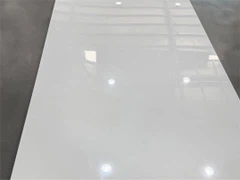
First off, let's quickly go over what SMC is. SMC stands for Sheet Molding Compound. It's a composite material that's made up of chopped glass fibers, thermosetting resins, fillers, and various additives. SMC has become a popular choice in the automotive industry because it's lightweight, strong, and can be molded into complex shapes. You can learn more about SMC Sheet on our website.
Now, let's get to the main question: UV resistance. UV rays from the sun can be pretty harsh on materials. They can cause fading, cracking, and a loss of mechanical properties over time. This is a big deal for automotive parts, which are constantly exposed to the elements.
So, are SMC automotive parts up to the challenge? The answer is generally yes, but it depends on a few factors.
The Science Behind SMC's UV Resistance
The thermosetting resins used in SMC play a crucial role in its UV resistance. These resins have a cross - linked molecular structure, which gives them good stability against UV radiation. When the SMC is properly formulated, the resins can absorb and dissipate the energy from UV rays, preventing it from causing damage to the material.
The additives in SMC also contribute to its UV resistance. For example, UV stabilizers are often added to the compound. These stabilizers work by either absorbing the UV light or by quenching the free radicals that are generated when the material is exposed to UV. This helps to prevent the degradation of the resin and the glass fibers in the SMC.
Real - World Performance
In real - world scenarios, SMC automotive parts have shown good resistance to UV rays. Take, for instance, the exterior parts of cars. Bumpers, grilles, and body panels made from SMC can withstand years of sunlight exposure without significant fading or cracking. This is a huge advantage for car manufacturers, as it means that the vehicles will look good and maintain their structural integrity for a longer time.
We've also seen great performance in other applications. Our SMC Meter Box is often installed outdoors, where it's constantly exposed to the sun. These meter boxes have been tested in various climates, from the hot and sunny deserts to the humid coastal areas, and they've held up well against UV rays.
Factors Affecting UV Resistance
However, it's not all sunshine and rainbows. There are a few factors that can affect the UV resistance of SMC automotive parts.
Quality of Formulation
The quality of the SMC formulation is key. If the right combination of resins, additives, and fibers isn't used, the UV resistance can be compromised. For example, if too little UV stabilizer is added, the material may start to degrade more quickly when exposed to UV.
Thickness of the Part
The thickness of the SMC part also matters. Thicker parts generally have better UV resistance because there's more material to absorb and dissipate the UV energy. Thinner parts may be more prone to damage, especially if they're exposed to intense sunlight for long periods.
Environmental Conditions
The environment in which the SMC part is used can have a big impact on its UV resistance. High - altitude areas receive more intense UV radiation, so parts used in these regions may experience more rapid degradation. Similarly, areas with high levels of pollution can also affect the UV resistance of SMC, as pollutants can react with the material and make it more vulnerable to UV damage.
Testing and Certification
To ensure that our SMC automotive parts meet the highest standards of UV resistance, we conduct rigorous testing. We use accelerated weathering tests, where the parts are exposed to high - intensity UV light and other environmental factors in a controlled laboratory setting. This allows us to simulate years of real - world exposure in a relatively short period of time.
We also work towards getting relevant certifications for our products. These certifications are a testament to the quality and UV resistance of our SMC parts. For example, the SMC Responder has passed several industry - recognized tests for UV resistance, which gives our customers peace of mind when using our products.
Why Choose Our SMC Automotive Parts
As a supplier, we take pride in offering high - quality SMC automotive parts with excellent UV resistance. Our team of experts is constantly working on improving our formulations to ensure that our parts can withstand the toughest environmental conditions.
We understand that UV resistance is just one of the many factors that you consider when choosing automotive parts. That's why we also focus on other aspects like strength, weight, and cost - effectiveness. Our SMC parts are lightweight, which can help to improve fuel efficiency in vehicles. At the same time, they're strong and durable, which means that they can stand up to the rigors of daily use.


Let's Talk Business
If you're in the market for SMC automotive parts, I'd love to have a chat with you. Whether you're a car manufacturer looking for reliable exterior parts or a supplier in need of high - quality SMC components, we're here to help. Our parts are not only resistant to UV rays but also offer great value for money.
Don't hesitate to reach out to us to discuss your specific requirements. We can work together to find the perfect SMC solution for your automotive needs.
References
- "Handbook of Composites" by Lawrence J. Broutman and Ronald H. Krock
- "Composite Materials in Automotive Engineering" by David Crolla and J. P. Mathews
- Industry reports on SMC materials and their performance in automotive applications
Send Inquiry